


Thursday, Oct 02, 2025
Detroit, MI
Set List
Highlights
By Adam Lucas
DETROIT—It’s not unusual for Eric Church to alter some familiar lyrics to fit the city where he’s playing.
It is rather unusual, though, for the subject of those lyrics to be standing in the crowd.
That’s what happened on Thursday in Detroit. Early in the set, Church wanted to give “Mistress Named Music” a little local flavor. So he sang, “Enough whiskey and Coke to get The Machine Shop in Flint, Mich., in a bind.”
And there, standing on the side of the stage, was Kevin Zink. You might have spotted him by his Machine Shop Concert Lounge shirt. He opened the club in 2002, and it quickly became a centerpiece of any Midwestern tour.
But don’t picture a honky-tonk. If you’re a longtime Chief fan or saw his residency show at Chief’s on Broadway, you’ve probably heard him tell stories about those early days of 2006 and 2007, when he had to play heavy metal clubs just to find an audience. When he talks about those metal clubs, he’s talking about The Machine Shop.
“It was a cinderblock room,” says bassist Lee Hendricks. “On one side was a mall and on the other side was a bingo parlor. Those types of rooms have a certain smell when you get all those people packed in there. You smell that and you’re like, ‘Ah, there it is.’”
“It’s the best club in America,” says guitarist Driver Williams. “That was when we started playing shows and seeing people who looked like us.”
There is one defining characteristic of The Machine Shop that everyone involved clearly remembers almost 20 years later.
“The hearse,” Hendricks says.
“He had a hearse!” guitarist Jeff Cease says.
“There was this hearse,” Williams says. “And he would give you the keys—you didn’t have a driver, you just drove yourself in this hearse—and that’s how you got back and forth from the hotel to the club.”
When the runner is a hearse, that’s about as rock and roll as it gets. But Church and his band and crew didn’t always leave when the show was over. Instead, they’d pay a couple bartenders to hang around and spend most of the rest of the night—and sometimes the morning—at The Machine Shop.
“And I still see that same band and crew today,” Zink said on Thursday night, looking around the production office. “That’s how you know what a good person Eric is, because people don’t want to stay around you like that if you’re not a good person. They have all stayed loyal to each other for going on 20 years.”
Those early shows were a little raw. But still…something was there.
“I see a lot,” Zink says of his 23 years in the club business. “There are certain people who you see them and you know, ‘That’s a rock star.’ The way they talk to the fans, the way they present themselves, their songwriting. You could feel right off the bat that Eric was—and is—a rock star. We knew it right away.”
He tried to book Church as often as possible, eventually landing three or four shows per year. He remembers “Smoke a Little Smoke” being a set highlight back then, just like it was on Thursday night.
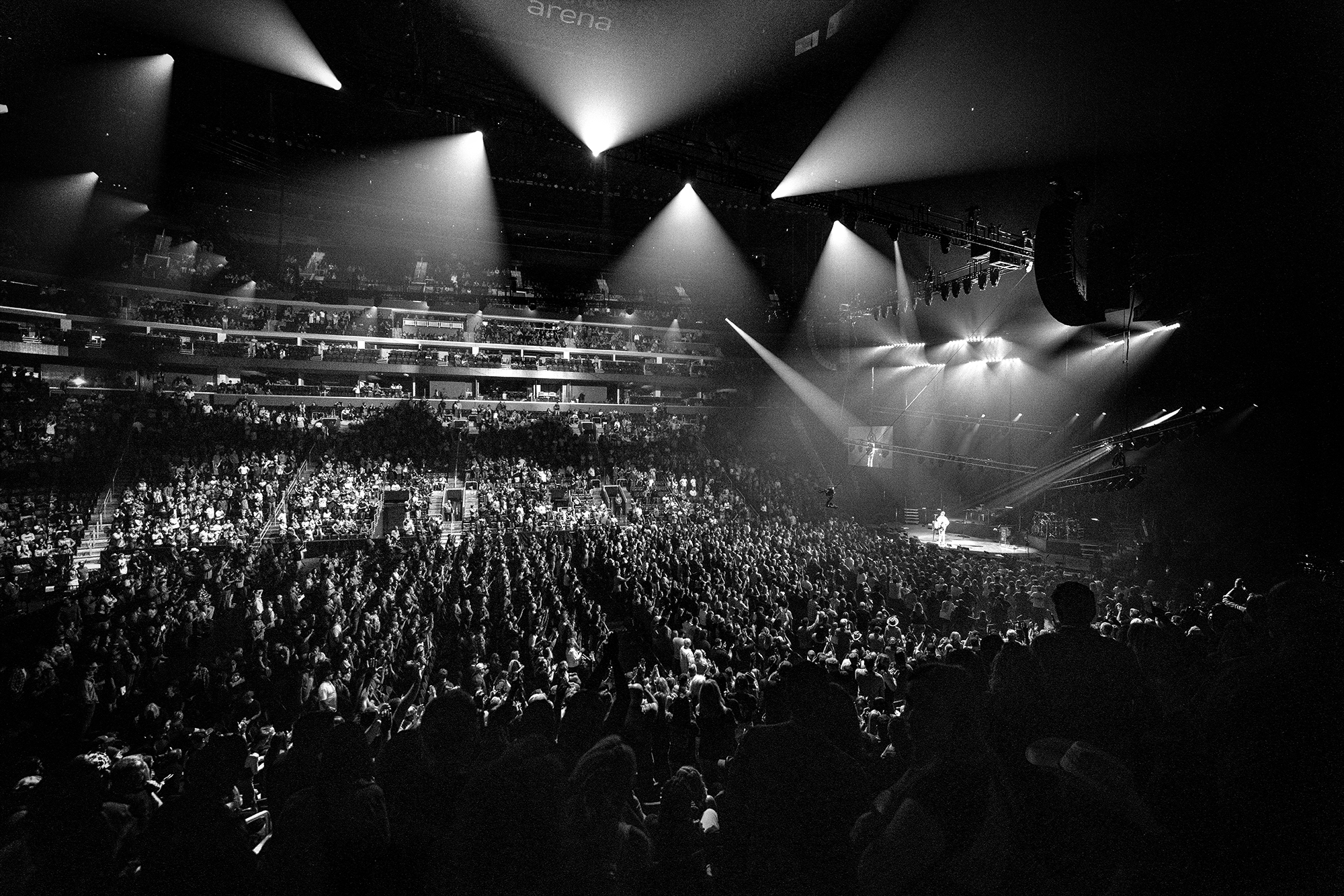
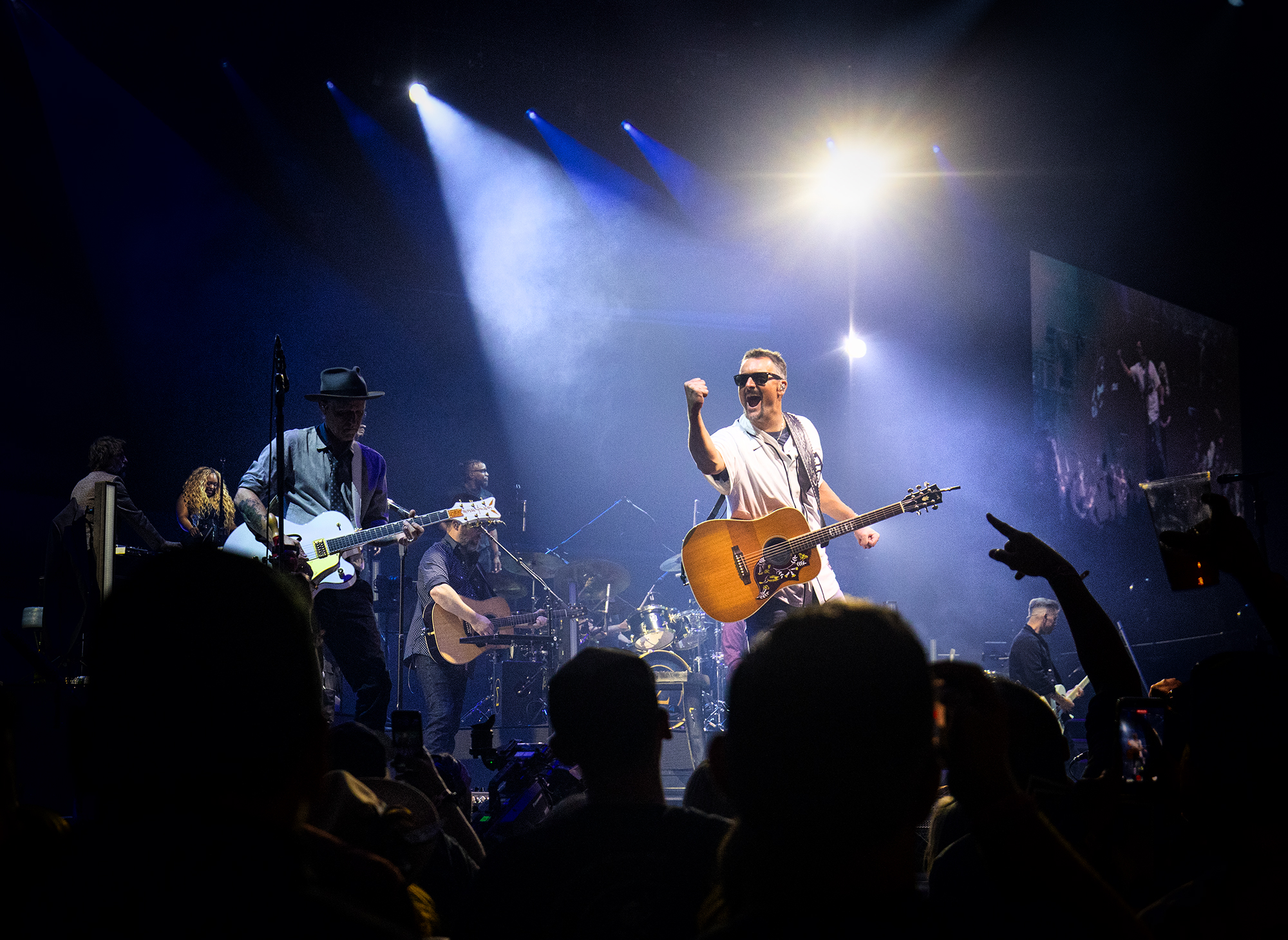
Some of the same skills Church honed in that cinderblock room are still evident today. The pit tried to get a little ahead of him on “Smoke,” and he quickly reined them back in. “I’ll lead this,” he told them with a grin, the crowd of thousands at Little Caesars Arena being just slightly more obedient than the hundreds who packed The Machine Shop.
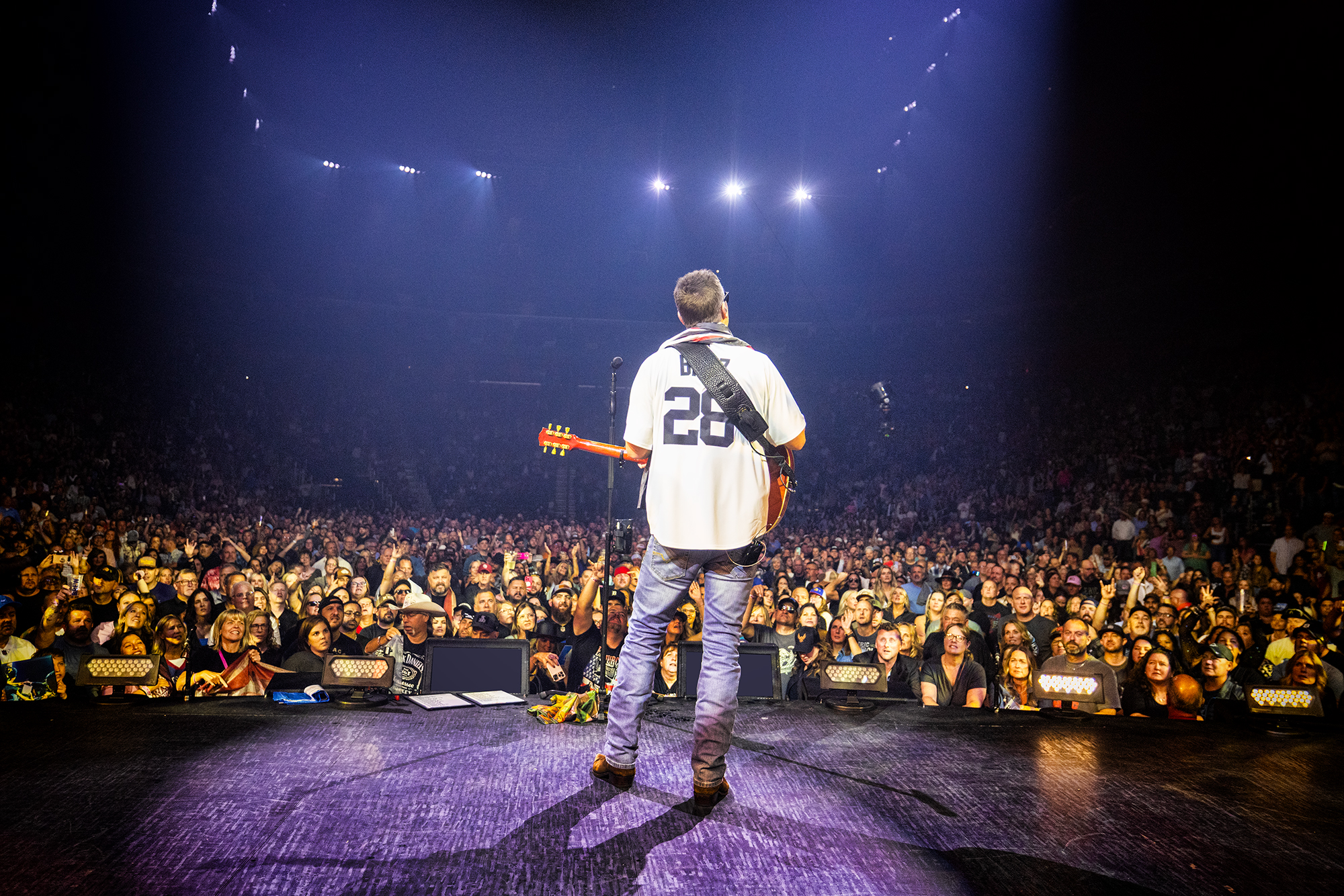
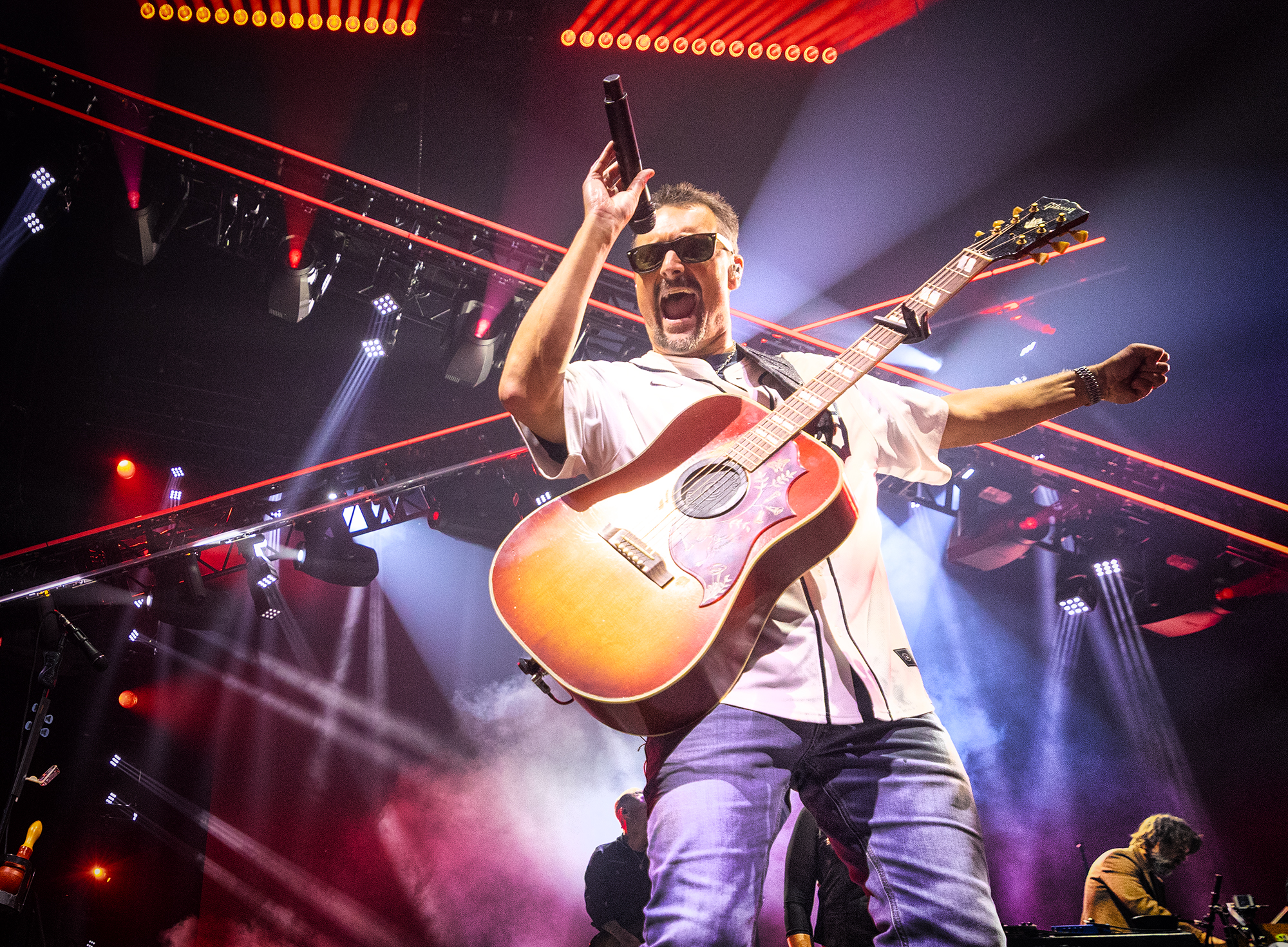
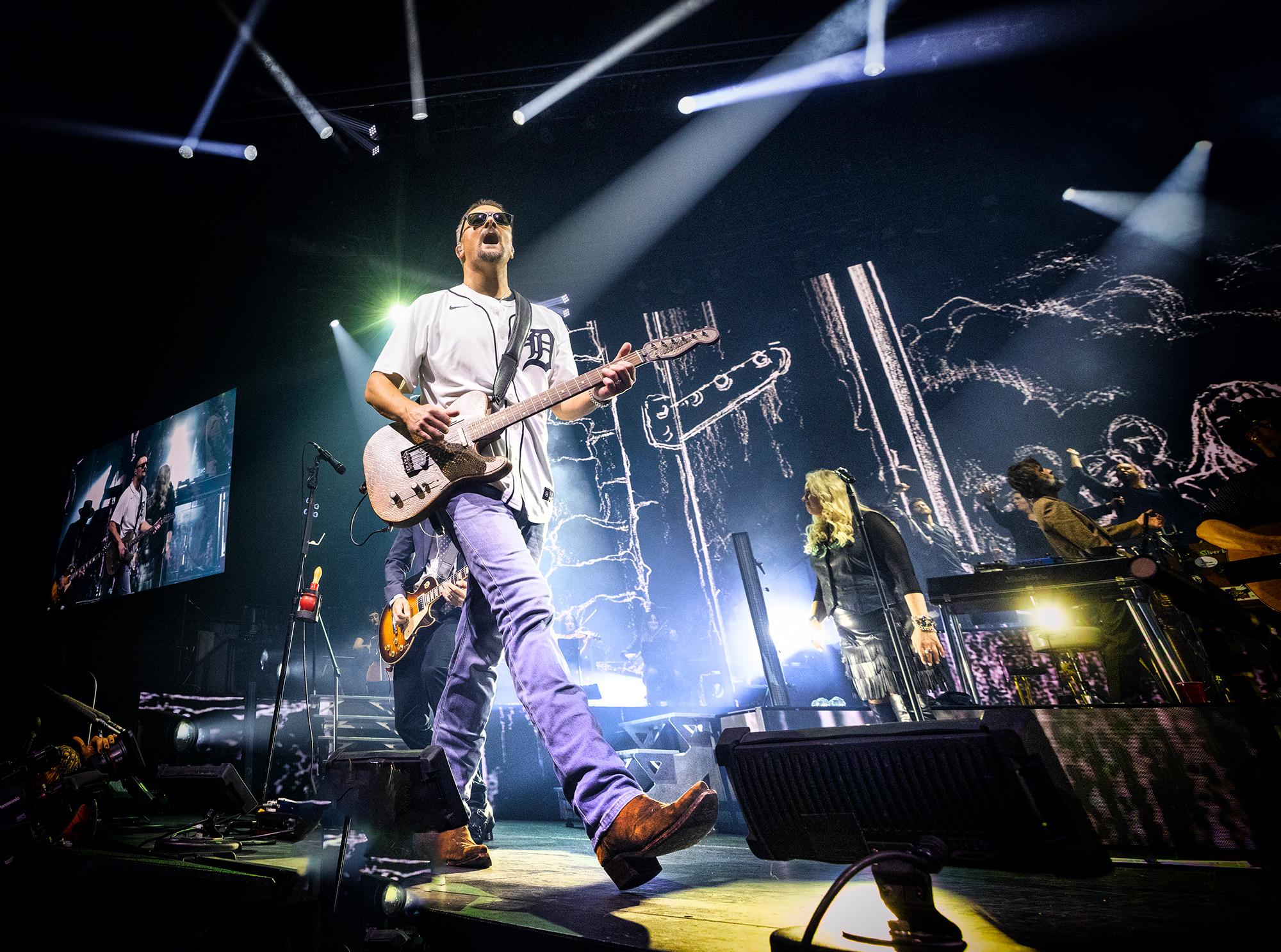
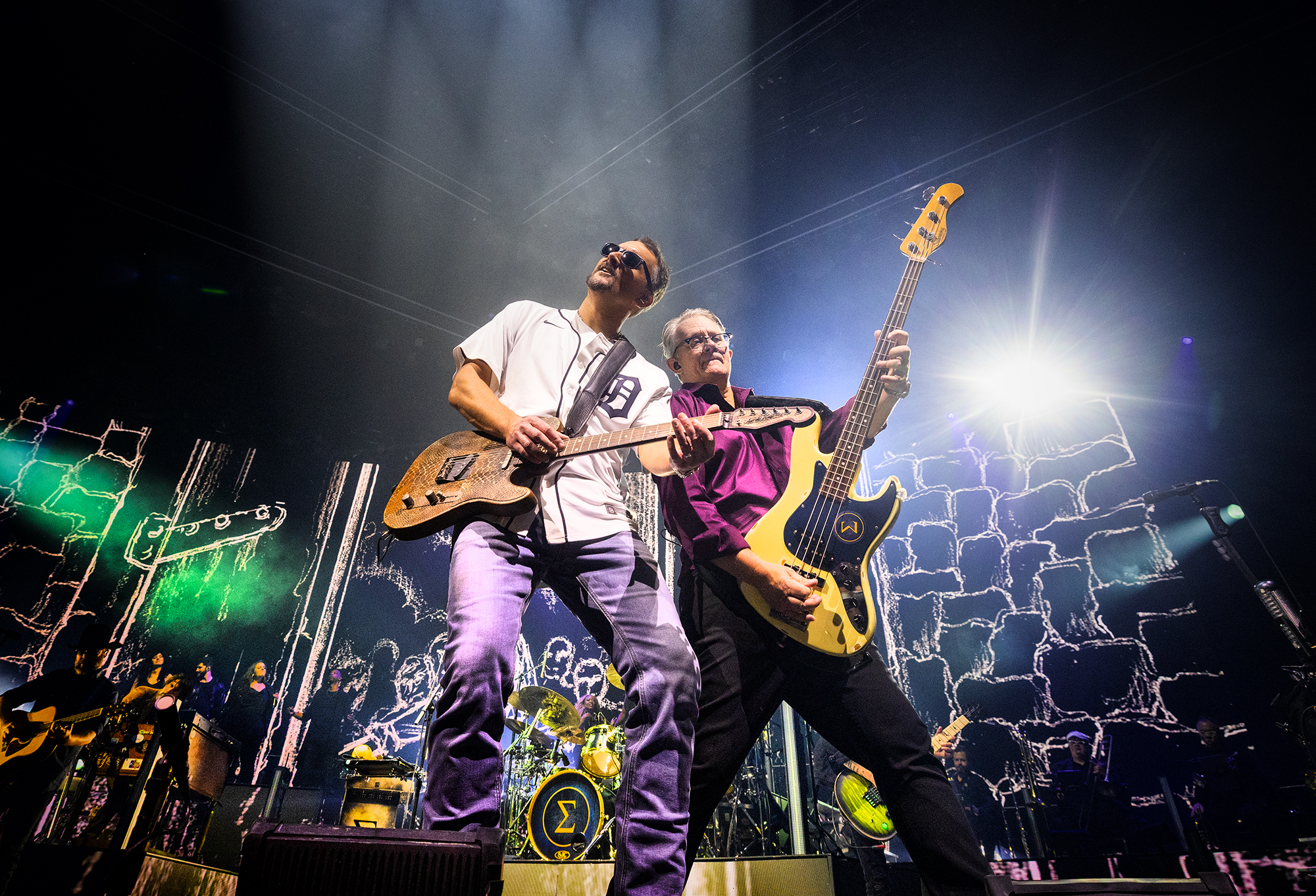
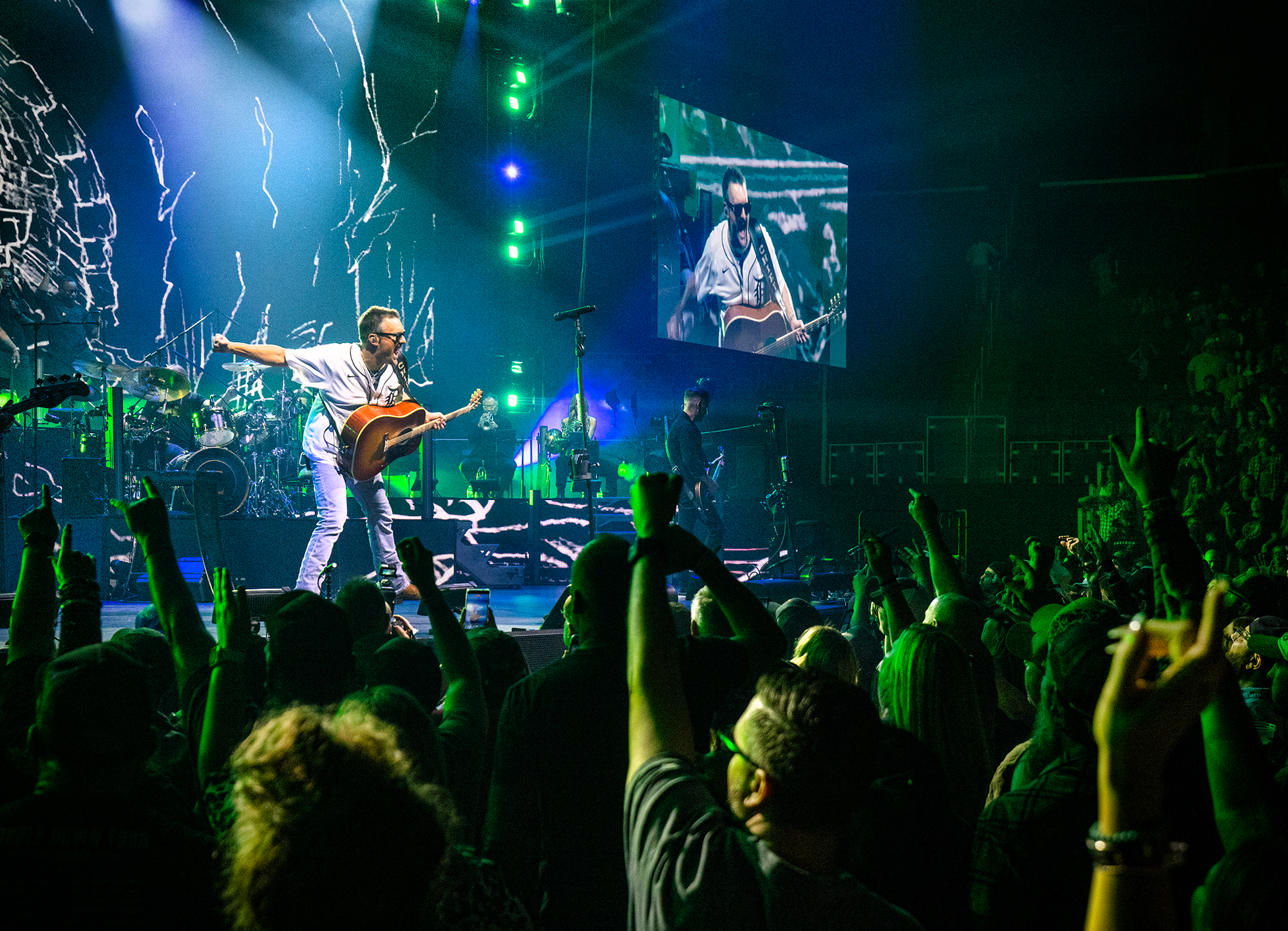
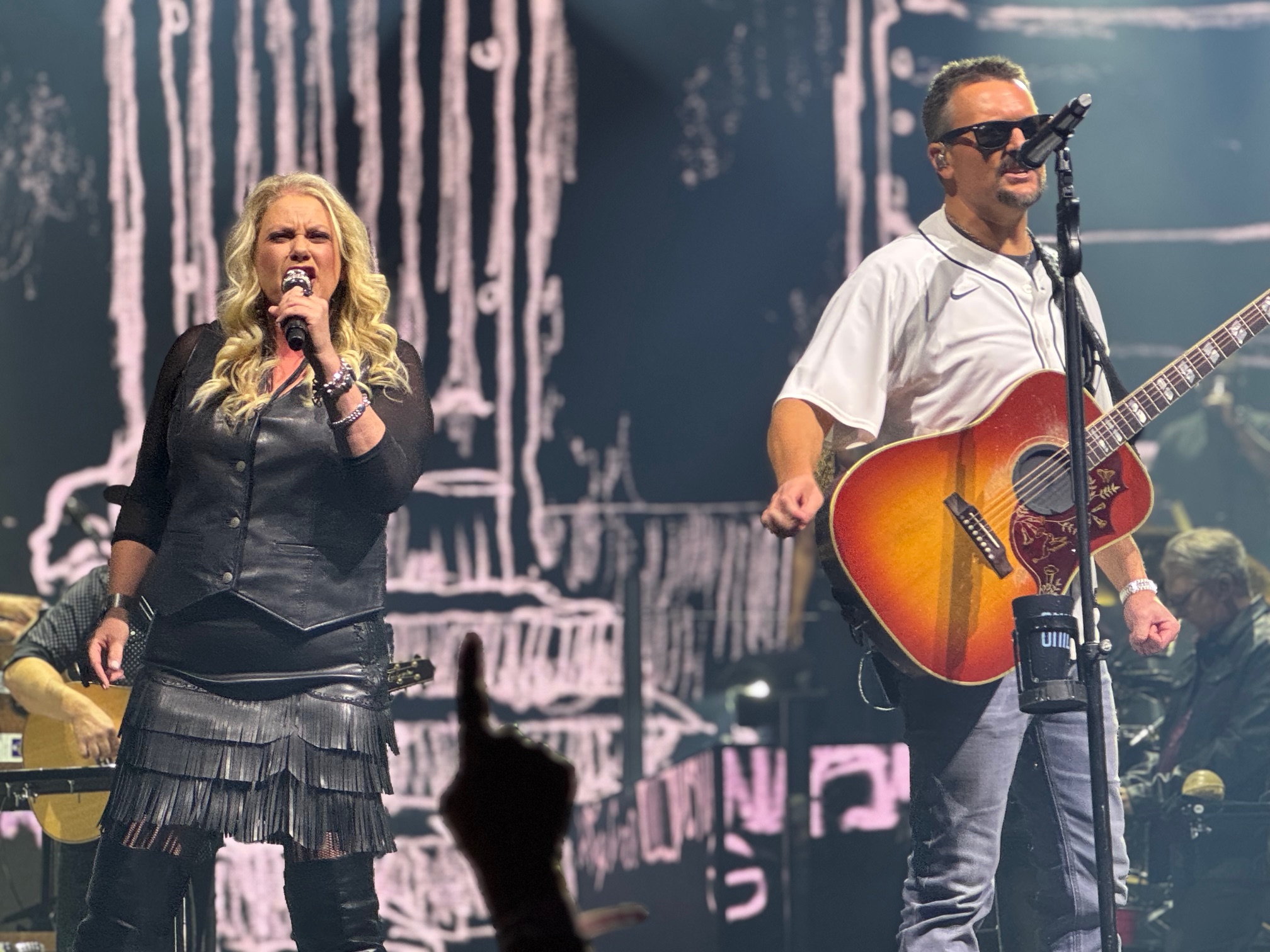
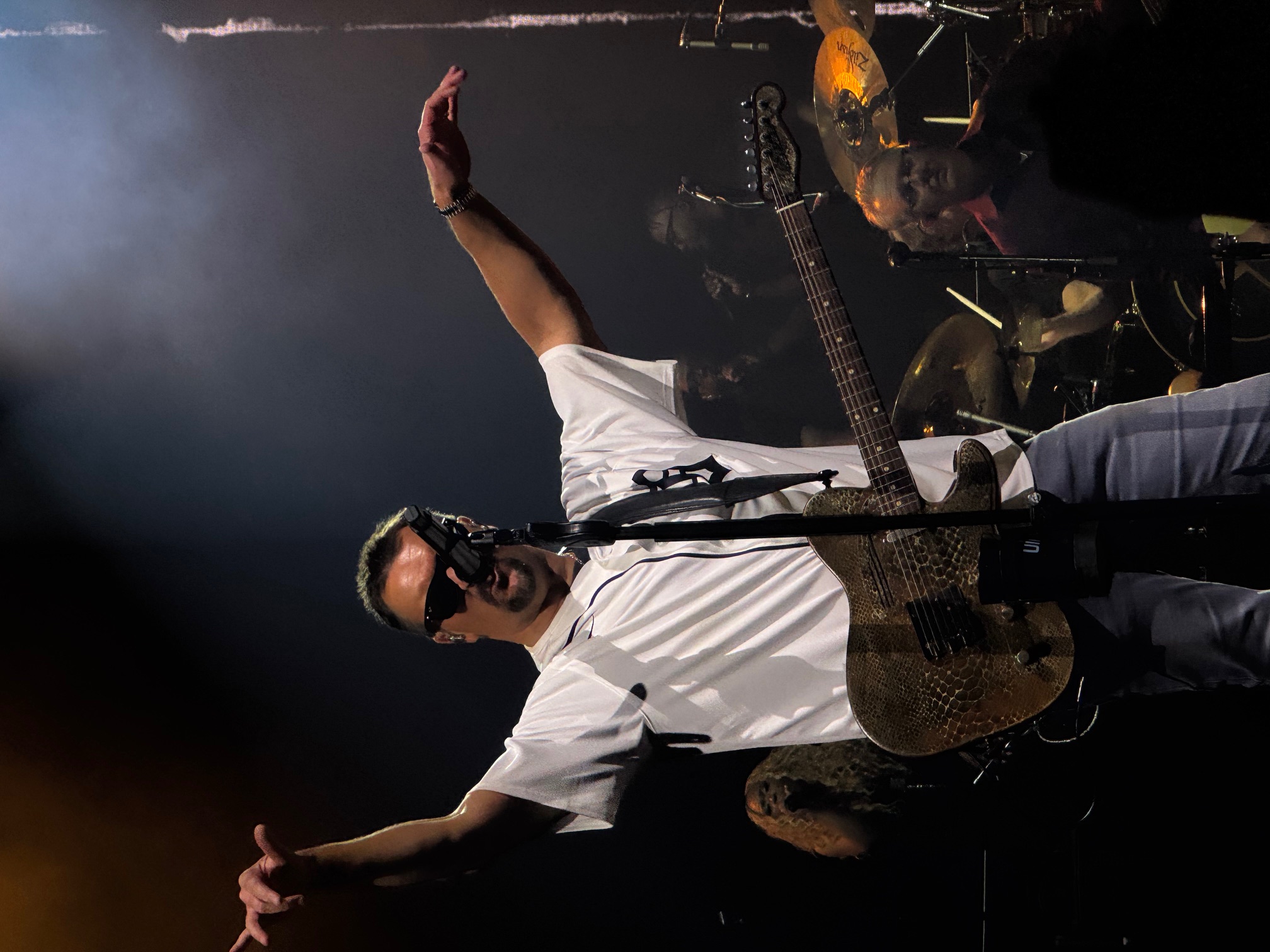
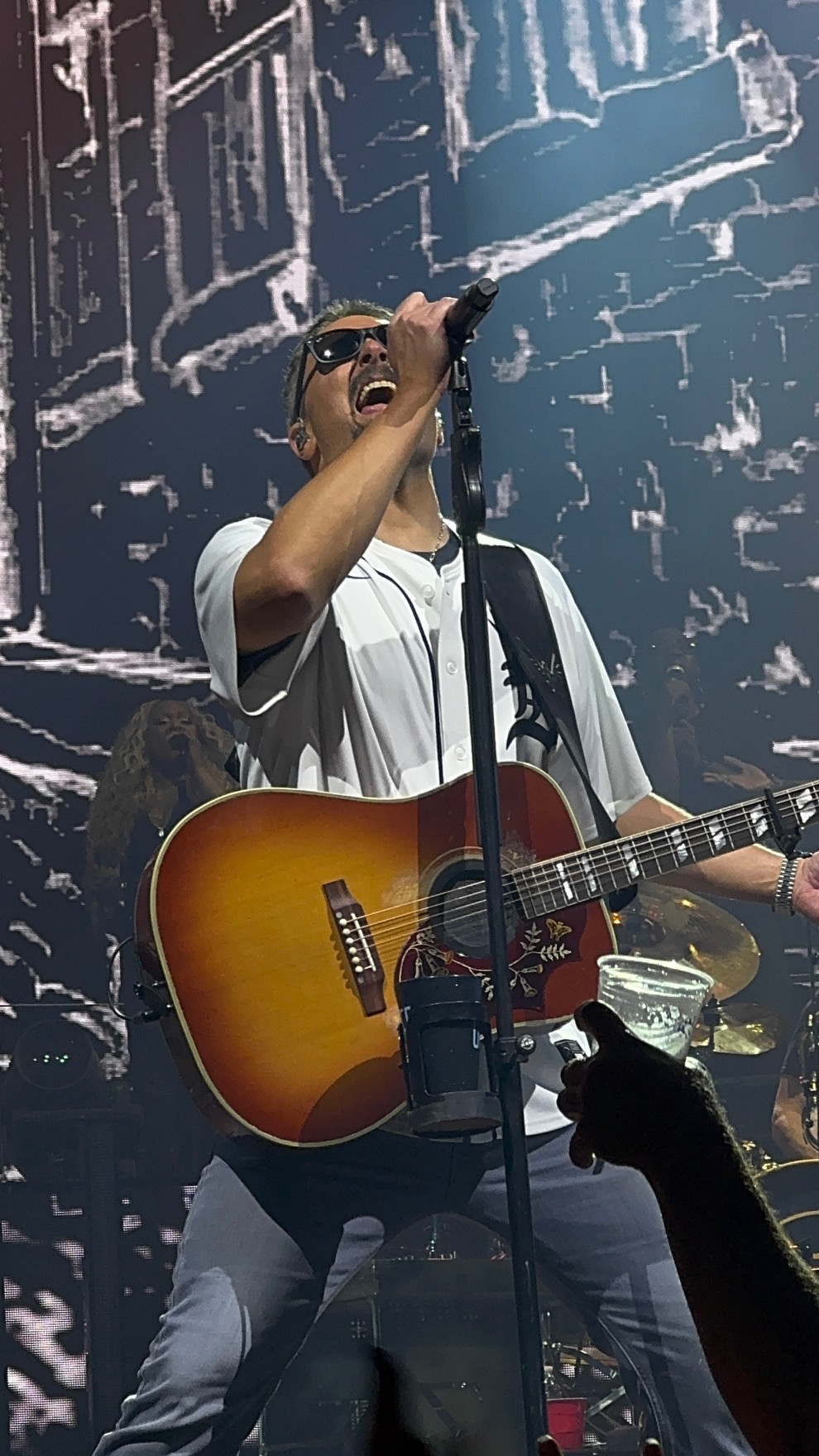
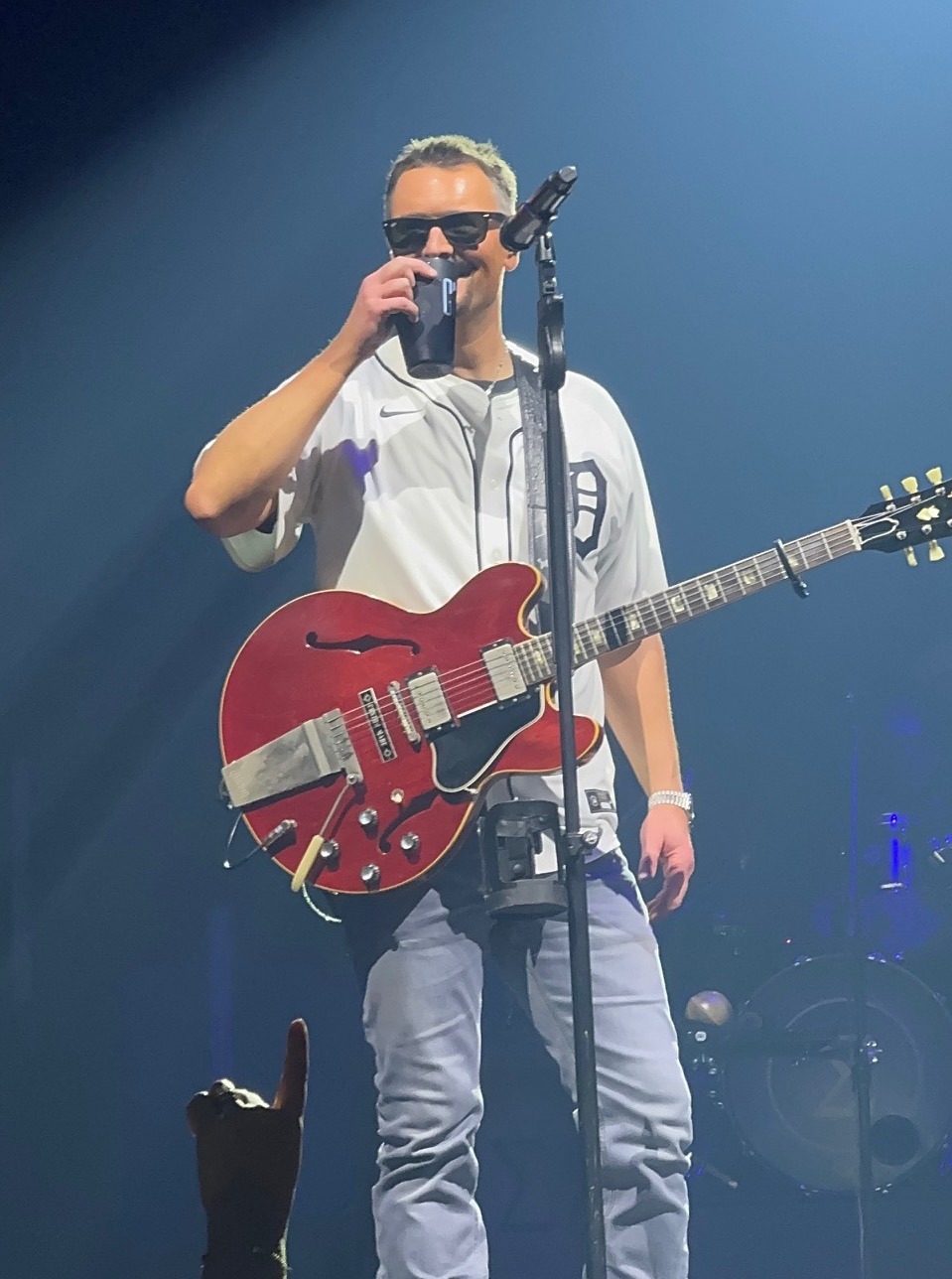
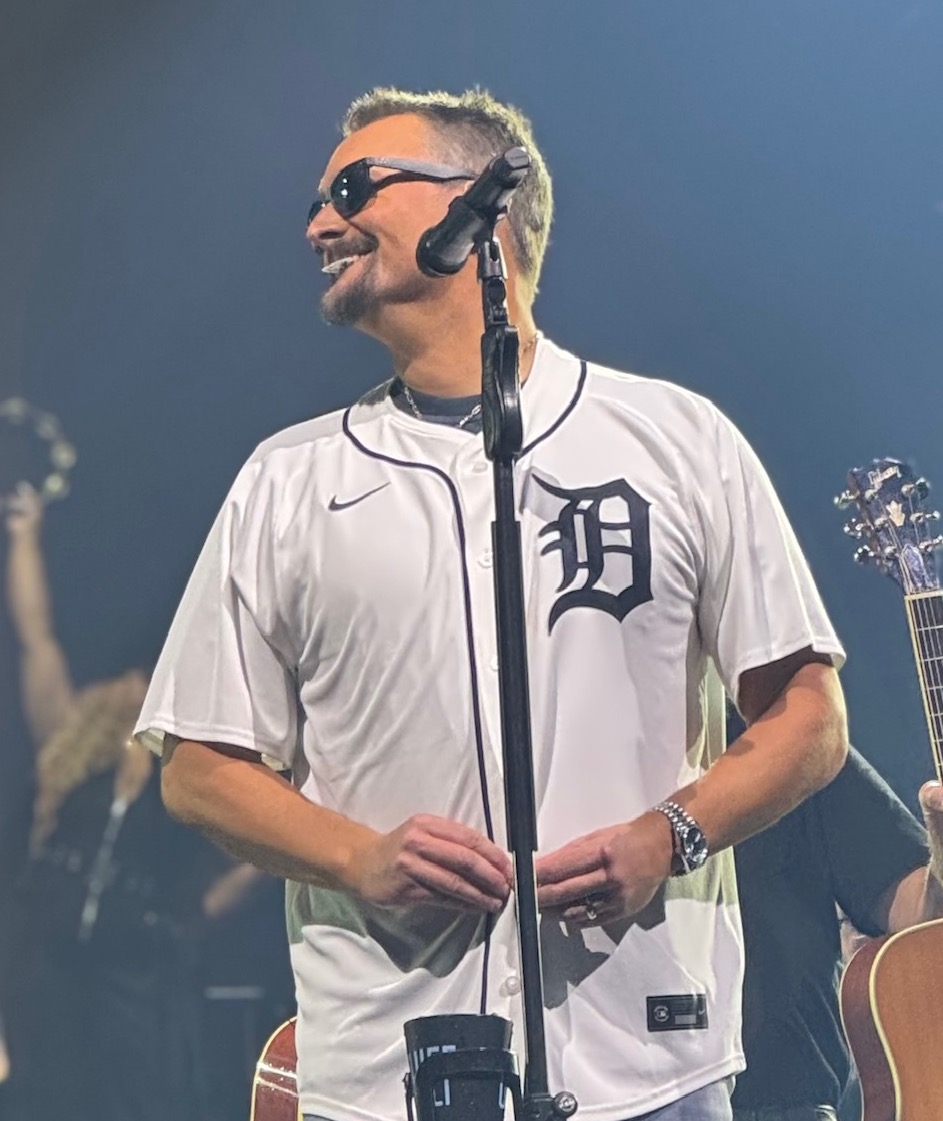
Church, who spent much of the evening wearing a Javy Baez Detroit Tigers jersey after the baseball team’s big playoff win earlier in the day, has a surprising number of roots in Detroit. “I respect the people here,” Church said. “I respect the history here. And I respect the music history here.”
He will be quick to tell you that Bob Seger is a key figure in his career, because Seger took Church on tour when almost no one else would. He saluted Seger with a three-song medley on Thursday night, combining “Against the Wind,” “Like a Rock,” and “Night Moves” during his solo portion of the show.
Another central figure was a little more anonymous than Seger but no less important.
“This guy right here,” said longtime Church tour manager Todd Bunch, pointing to Zink, “is the reason a lot of these people are here.”
He got them there with a strong sense of belief almost 20 years ago. He got them there because he booked a guy from Granite Falls who had the moxie to play a club like The Machine Shop even if he maybe didn’t have the credentials.
And he got them there—sometimes—in a hearse.